
Remembering my Obachan
What I shared at my grandmother's funeral

My grandmother (Obachan), Masuye Urata, passed away in February, two months shy of her 101st birthday. She was an extraordinary woman. Born in Seattle to Japanese parents who owned a prominent fish wholesale business, she grew up in Japan with her siblings and was unable to return home when WWII broke out. While her parents were incarcerated, she and three of her siblings survived the atomic bomb, losing their youngest sister, Nobu. After she returned to Seattle, she married and raised five children in Wrangell, Alaska, where my other set of Japanese great-grandparents settled after working on the gold rush and opening a mink farm that was shuttered at the onset of their incarceration.
Despite surviving significant hardship, my Obachan lived with determination, confidence and abundant generosity. I thought of her often in the years that I worked in Asian American narrative change. So many people assume my own confidence, outspokenness and opinions come from my White heritage. In truth, it comes from Obachan.
Working in the Asian American space, I often felt so much dissonance. Obachan’s example showed that the dominant narratives that our community frequently internalized, about keeping our heads down, being model minorities, or being invisible, were understandable, but not inevitable and certainly not our only options. Her example reminds me that our worth doesn’t rest on recognition from mainstream culture. We have the freedom to be our most true selves, especially when that self is rooted in dignity.
I shared this piece at her celebration of life, attended by our large extended family. I’m sharing it here, by request, and because I hope her example might inspire others to expand who Asian Americans can be. Note that some of the references are to family stories that I won’t explain in detail.
Read her obituary, and my reflection on her legacy as an atomic bomb survivor.
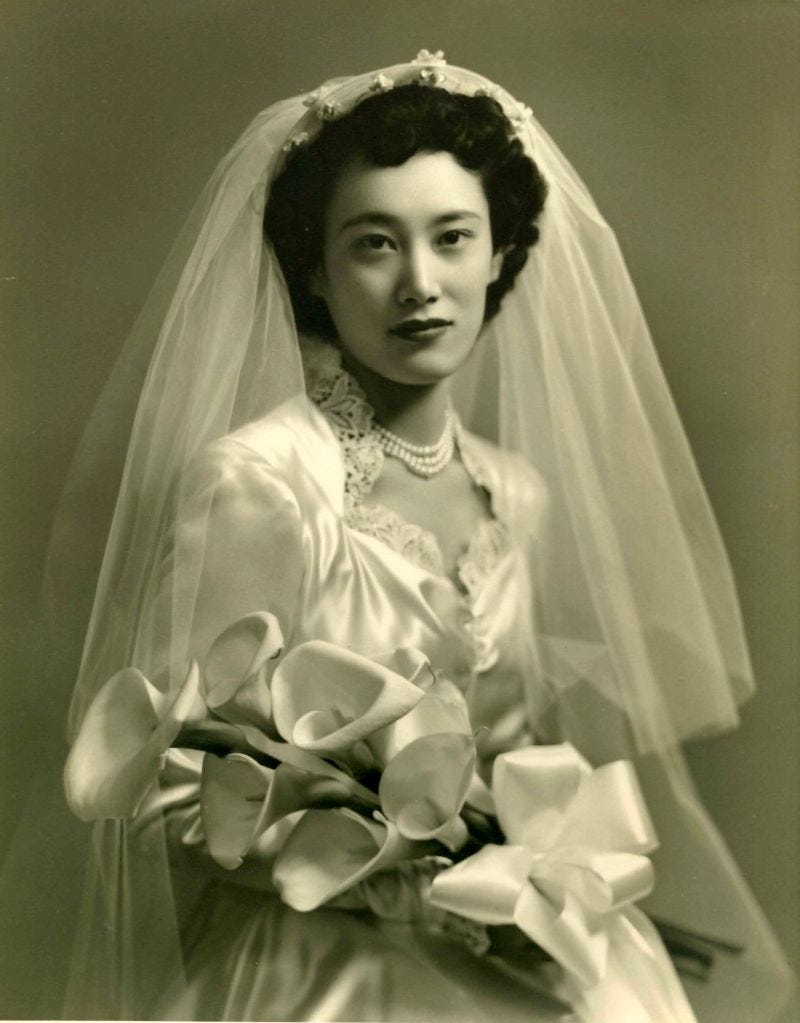
When I was little, I used to wander into Obachan’s bedroom and gaze at her wedding photo. It was captivating. It wasn’t just that she wore the most beautiful dress I had ever seen. Her presence seemed to leap out of the photograph and surround me. She radiated a level of confidence that was unlike anyone. That confidence—and the dignity from which it came—is Obachan’s legacy to me.
It’s no surprise that Obachan was confident. How many of you were ever told, when asking for a recipe or help with sewing, “It’s easy; just do this and this.” Raise your hand! We can all tick off a list of her accomplishments.
But that’s not what I’m talking about.
I think Obachan’s confidence was rooted in a deeply held sense of dignity.
I first noticed it when she would tell me about Nobu. Obachan didn’t hide the truth. Nobu didn’t go to the best school and needed glasses. Obachan had to quickly finish her homework in the morning before school more than once. But, Nobu was also someone who slyly stole eggs from her aunt’s coop when food was scarce. She spoke of Nobu so tenderly. “I was like a little mother to her,” she would often say. Nobu was worth it. She was worth facing the horrors of Hiroshima to search for her body, and to preserve her memory so that one day, I might feel so deeply connected to a little girl I never got to meet.
This dignity also surfaced when talking about her parents. Her father, whose business success and connections landed him in prison camp on December 7, but who, after the war, ingeniously convinced a G.I. to find his children, and would bring home the “best looking fish” for Obachan once they returned to Seattle. Or her mother, who never seemed to favor Obachan, but who smuggled money to her husband in cigarette wrappers and who unrolled bolt after bolt of fabric for kimono that would feed the siblings when money became scarce.
We often remember those who have passed as either victims, villains or gods, but Obachan spoke of our ancestors with texture and detail that made them human. She gave the utmost dignity to people who experienced the worst of history. She helped all of us feel proud of our ancestors when so many others internalized shame.
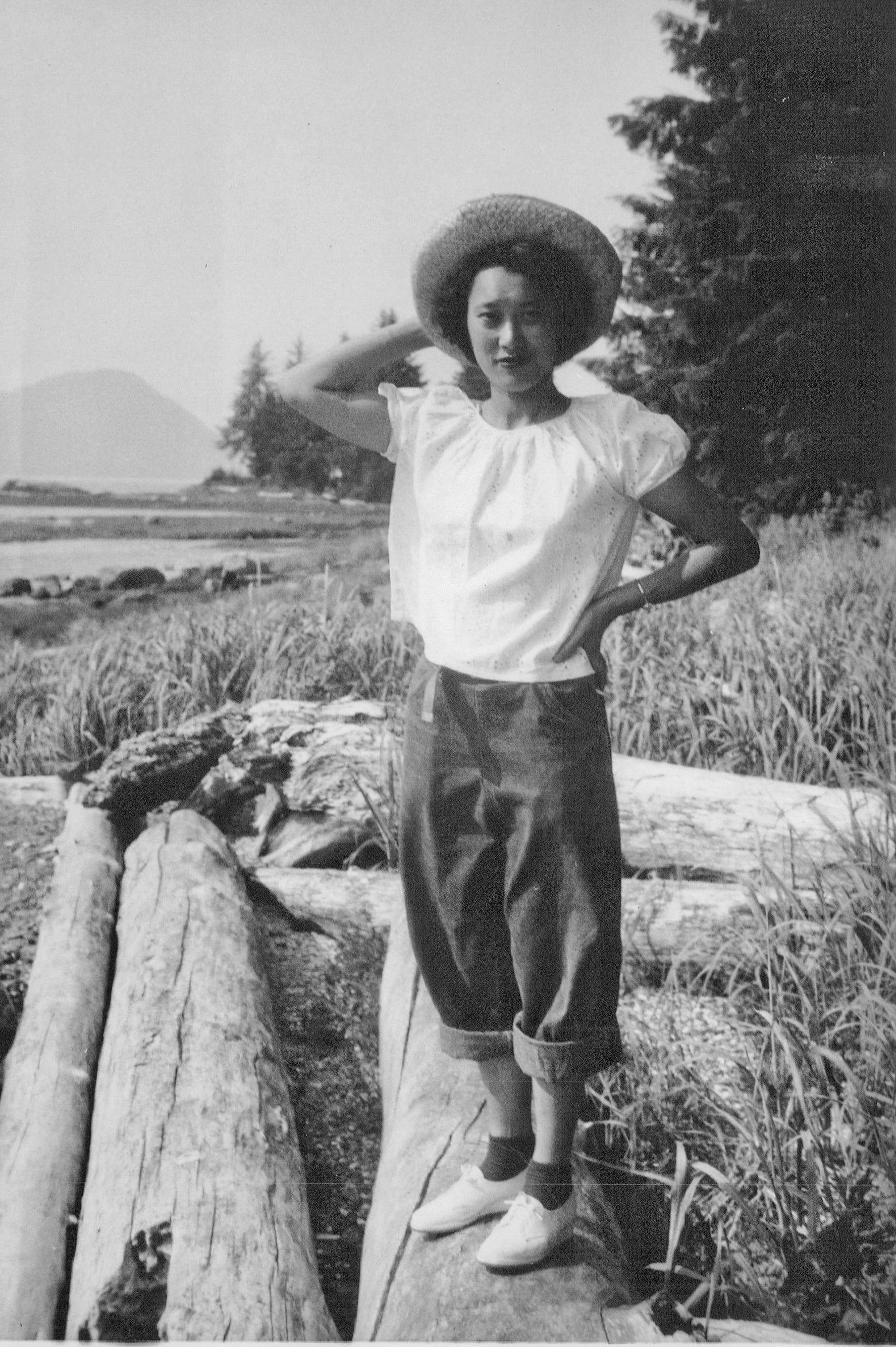
Obachan didn’t shy away from the disappointments in her own life, like missing out on college or the shock of moving to Alaska. She knew she deserved better. But, she told me how she would argue with her husband, which I assume was not the norm at the time. Everyone describes her boundless generosity and love during the years she raised her family, from delicious Sunday dinners to volunteering at church. The photographs from that time show it: Obachan proudly wearing a beautiful coat and hat she made. Obachan posing at the beach. Obachan on the couch with her five children gathered around her. These photographs show a woman taking up space, as if she was saying, “I’m worth it.”
I feel inspired by the way Obachan reinvented herself once again after retirement. Did you know that she found me a Japanese pen pal just by approaching a girl who looked my age in a noodle restaurant in Kyoto?! Seeing her travel the world, go tubing on Lake Powell at age 77 and remain fiercely stubborn until the end, makes me feel like I can do anything.
Obachan’s confidence was not just extraordinary for her generation, it is unusual for Asian American women. Her example, combined with my mom’s encouragements and history lessons about solidarity movements, let me live free of the expectations and stereotypes that so many of my Asian American peers faced. I knew I didn’t have to be a model minority or believe I was invisible or caught in perpetual survival mode, as many of my peers have internalized. Speaking up and facing those who underestimated me came so much more naturally, knowing my Obachan would have done the same.
I can’t say I know how to fully embody her lessons. When I find my own confidence slipping, remembering how my ancestors lived, how Obachan and others refused to bend to their situation, helps me regain my courage.
Obachan taught me that in whatever situation we’re dealt, we can live with confidence, dignity and generosity. We can steal the eggs or pose for the picture or mix butter and sugar together and grow fat after the war or eat the pumpkin cooked by the bomb. We can strive for excellence and share delicious food with each other, even while facing hard truths and disappointment.
We can move through the world as if we know we’re worth it, no matter what others do or don’t see. We can give others the dignity that we all deserve.
Obachan often said to me when I asked for help with sewing or cooking, “You could do it.” Because of her, I know that I can.
So moved by this. Thank you for sharing her inspiring story, her strength and wisdom. And oh what one picture can do!
It makes me wonder if the generation of our grandparents was made of other “material” or life crafted them differently—and how our experience crafts us.
Lovely tribute Kana. Thank you for sharing. I feel like I have learned from your Obachan too.